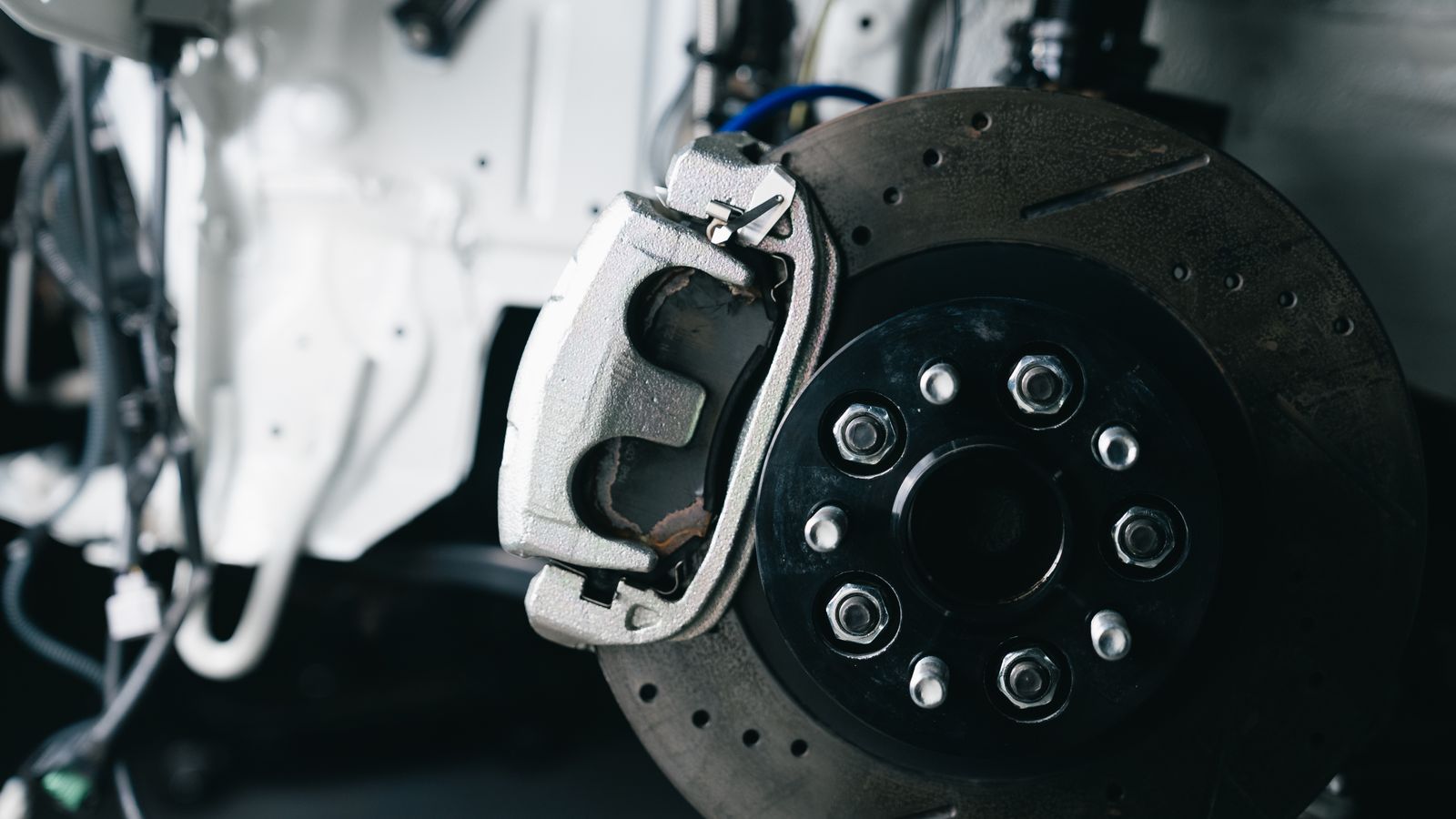
Warning signs your brakes need attention
- High-pitched squeal when braking. Many pads have a small metal wear indicator that squeals when the pad is getting thin. Time to book an inspection.
- Grinding or growling. This can mean the pad is worn through and metal is hitting the rotor. Get it checked right away: driving on it damages rotors and turns a pad job into a bigger bill.
- Vibration or pulsing in the pedal or steering wheel when braking, often from rotors with uneven surfaces.
- A soft, spongy or sinking pedal. This can mean air or moisture in the fluid or a leak. Treat it as urgent.
- The car pulls to one side when you brake.
- The brake warning light stays on. Check the fluid level and have the system inspected.
If the pedal goes to the floor, the car will not stop normally, or you see fluid leaking near a wheel, don't drive it. Have it towed.
How long do brakes last?
It depends heavily on how and where you drive. Pads on a highway commuter can last far longer than pads on a car driven in city traffic or in the hills. Very roughly, many pads last somewhere between 30,000 and 70,000 miles. Rotors often last through one or more sets of pads. Have the brakes inspected at least once a year or whenever your tires are rotated.
Don't forget the brake fluid
Brake fluid absorbs moisture over time, which can lower its boiling point and corrode parts. Many manufacturers call for changing it every two to three years. Your owner's manual has the exact interval. It is an inexpensive service that is easy to forget.
How to avoid overpaying for a brake job
- Ask for a written, itemized quote that lists pads, rotors, labor and fluid separately.
- Ask whether the rotors really need replacing or can be measured and reused. Ask to see the measurement compared with the minimum thickness stamped on the rotor.
- Get a second quote for any big job. Prices for the same work vary a lot from shop to shop.
- Ask for your old parts back. It is a simple way to confirm the work was done.
- Drive to save your brakes. Looking ahead and coasting to stops saves pads as well as gas.
- Doing it yourself? Brake pads and rotors are a common DIY job for experienced home mechanics. If you are not confident, leave brakes to a professional.
Brake service and parts
Some links on this page are affiliate links: if you buy through them we may earn a commission, at no extra cost to you. How we make money.
Mavis Tires & Brakes
Tire and brake service centers. Book a brake inspection or service appointment online.
Book brake service →PartsGeek
Brake pads, rotors and calipers for most makes and models if you do your own work.
Shop brake parts →Frequently asked questions
Why do my brakes squeal?
Often it is the wear indicator telling you the pads are getting thin. Squealing can also come from dust, moisture or certain pad materials. If it is constant, have the brakes inspected.
Do I need new rotors every time I replace pads?
Not always. If the rotors are smooth and above the minimum thickness stamped on them, they can often be reused. Ask the shop to show you the measurement.
How often should brakes be inspected?
At least once a year, and whenever your tires are rotated or you notice any of the warning signs above.